Showing posts with label Android. Show all posts
British telecoms giant EE says to launch 5G without Huawei

British telecoms giant EE says to launch 5G without Huawei

It is a possibility that Huawei has been preparing for years -- reportedly since 2012 -- by building an operating system of its own.

LONDON - Telecoms giant EE will this month become the first operator in Britain to launch a 5G network but will do so without Huawei technology as originally planned, the company said on Wednesday.
EE had announced earlier that it would bring Huawei's first 5G phone, the Huawei Mate 20 X 5G, to Britain but the Chinese giant's involvement in the country's telecoms industry has become politically controversial.
US internet giant Google, whose Android mobile operating system powers most of the world's smartphones, said on Sunday it was beginning to cut ties with China's Huawei, which Washington considers a national security threat.
In the midst of a trade war with Beijing, President Donald Trump has barred US companies from engaging in telecommunications trade with foreign companies said to threaten American national security.
Source
AFP
Huawei own OS system may be ready this year

Huawei own OS system may be ready this year

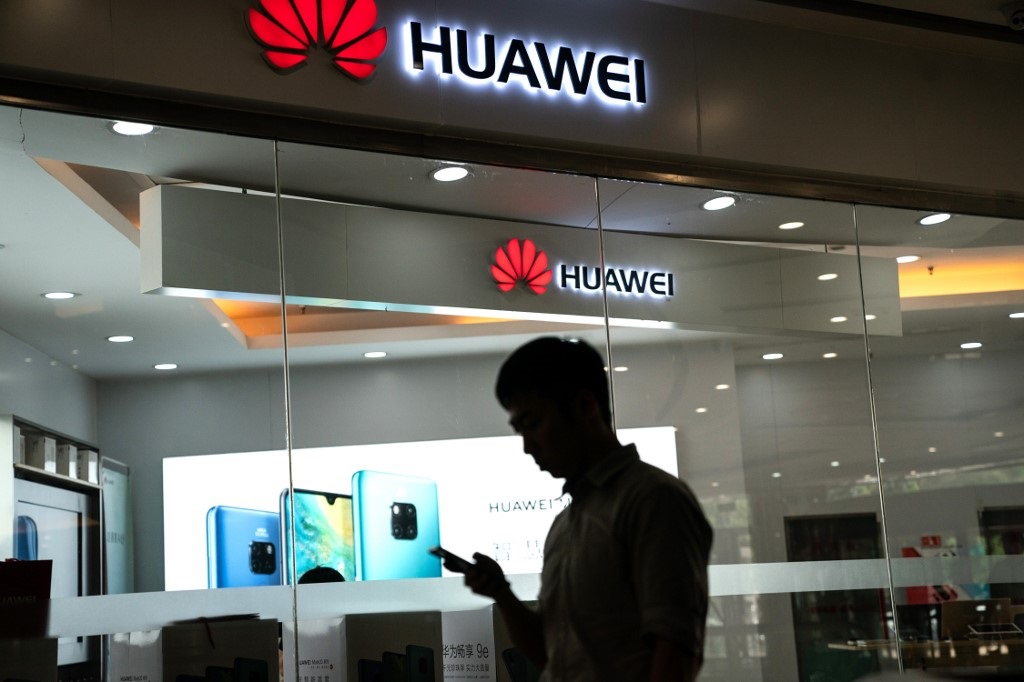
A man walks past a Huawei logo displayed at a retail store in Beijing on May 23, 2019.

BEIJING - Chinese telecom giant Huawei says it could roll out its own operating system for smartphones and laptops in China by the autumn after the United States blacklisted the company, a report said on Thursday.
The international version of the system could be ready in the first or second quarter of 2020, said Richard Yu, the head of Huawei's consumer business, told US channel CNBC.

The company was dealt a blow this week with Google's decision to partially cut off Huawei devices from its Android OS following a US order banning the sale or transfer of American technology to the firm.
"Today, Huawei, we are still committed to Microsoft Windows and Google Android," Richard Yu, head of Huawei's consumer business, told CNBC. "But if we cannot use that, Huawei will prepare the plan B to use our own OS."
The Global Times, a Chinese state-run daily, reported on Monday that the platform -- named "HongMeng" -- was undergoing trials and will gradually replace the Android system.
"We don't want to do this but we will be forced to do that because of the US government. I think the US, this kind of thing, will also not only be bad news for us, but also bad news for the US companies because we support" US businesses, Yu told CNBC.  "We don't want to do this but we have no other solution, no other choice."


The US Commerce Department, which added Huawei and 68 of its affiliates to an "entity list" last week, on Monday announced a 90-day reprieve, allowing some services to continue.
Source
AFP

Google restricts Huawei's access to Android after Trump blacklist

Google has suspended any business with Huawei requiring the transfer of hardware, software and technical services, except those publicly available through open-source licensing, a source said on Sunday.

The move is a blow to the Chinese technology company, which the US government has sought to blacklist around the world.
The decision is expected to hobble Huawei’s smartphone business outside China as the tech giant will immediately lose access to updates to Google’s Android operating system.
The next version of its Android smartphones will also lose access to popular services including the Google Play Store and Gmail and YouTube apps.
“Huawei will only be able to use the public version of Android and will not be able to get access to proprietary apps and services from Google,” the source said.
The Trump administration on Thursday added Huawei to a trade blacklist, immediately enacting restrictions that will make it extremely difficult for the company to do business with US companies.


It was not immediately clear on Sunday whether Huawei’s access to mobile software would be affected.On Friday, the US Commerce Department said it was considering scaling back restrictions on Huawei to “prevent the interruption of existing network operations and equipment".
The extent to which Huawei will be hurt by the US government’s blacklist is not yet known as its global supply chain assesses the impact.
Chip experts have questioned Huawei’s ability to continue to operate without US help.
Details of the services affected by the suspension were still being discussed Google, the source said.
Huawei lawyers are also studying the effects of the blacklist, a spokesman for the company said on Friday.
The tech company will still have access to Android Open Source Project, which is available for free to anyone who wishes to use it. There are about 2.5 billion active Android devices worldwide, Google estimates.


Huawei says it has spent the past few years preparing a contingency plan by developing its own technology in case it is blocked from using Android.
Some of this technology is already being used in products sold in China, the company has said.
Eric Xu, rotating chairman of Huawei, in March struck a defiant note in anticipation of retaliatory actions by US companies.
“No matter what happens, the Android Community does not have any legal right to block any company from accessing its open-source licence,” Mr Xu said.
Popular Google apps such as Gmail, YouTube and the Chrome browser that are available through Google’s Play Store will disappear from future Huawei handsets because those services require a commercial agreement with Google.


But users of existing Huawei devices who have access to the Google Play Store will still be able to download app updates provided.

Apps such as Gmail are updated through the store, unlike operating system updates which are typically handled by phone makers and telecoms operators, which the blacklist could affect, the source said.
The effect is expected to be minimal in the Chinese market. Most Google mobile apps are banned in China, where alternatives are offered by domestic competitors such as Tencent and Baidu.
Huawei’s European business, its second-biggest market, could be hit as it licences these services from Google in Europe.
“Having those apps is critical for smartphone makers to stay competitive in regions like Europe,” said Geoff Blaber, vice president of research at CCS Insight.
After US ban, Google restricts Huawei from using Android apps and updates: Report


Washington: Alphabet Inc's Google has suspended business with Huawei that requires the transfer of hardware, software and technical services except those publicly available via open source licensing, a source familiar with the matter told Reuters on Sunday, in a blow to the Chinese technology company that the US government has sought to blacklist around the world.
The move could hobble Huawei's smartphone business outside China as the tech giant will immediately lose access to updates to Google's Android operating system. The next version of its Android smartphones will also lose access to popular services including the Google Play Store and Gmail and YouTube apps.
"Huawei will only be able to use the public version of Android and will not be able to get access to proprietary apps and services from Google," the source said.

The Trump administration on Thursday added Huawei Technologies Co Ltd to a trade blacklist, immediately enacting restrictions that will make it extremely difficult for the company to do business with U.S. counterparts.
On Friday the US Commerce Department said it was considering scaling back restrictions on Huawei to "prevent the interruption of existing network operations and equipment." It was not immediately clear on Sunday whether Huawei's access to mobile software would be affected.


The extent to which Huawei will be hurt by the US government's blacklist is not yet known as its global supply chain assesses the impact. Chip experts have questioned Huawei's ability to continue to operate without US help.
Details of the specific services affected by the suspension were still being discussed internally at Google, according to the source. Huawei attorneys are also studying the impact of the blacklist, a Huawei spokesman said on Friday. Huawei was not immediately reachable for further comment.


Representatives of the US Commerce Department did not immediately have comment.
Popular Apps
Huawei will continue to have access to the version of the Android operating system available through the open source license, known as Android Open Source Project (AOSP), that is available for free to anyone who wishes to use it. There are about 2.5 billion active Android devices worldwide, according to Google.


But Google will stop providing Huawei with access, technical support and collaboration involving its proprietary apps and services going forward, the source said.
Huawei has said it has spent the last few years preparing a contingency plan by developing its own technology in case it is blocked from using Android. Some of this technology is already being used in products sold in China, the company has said.
In an interview with Reuters in March, Eric Xu, rotating chairman of Huawei, struck a defiant note in anticipation of retaliatory actions by U.S. companies. "No matter what happens, the Android Community does not have any legal right to block any company from accessing its open-source license," he said.
Popular Google apps such as Gmail, YouTube and the Chrome browser that are available through Google's Play Store will disappear from future Huawei handsets as those services are not covered by the open source license and require a commercial agreement with Google.


But users of existing Huawei devices who have access to the Google Play Store will still be able to download app updates provided by Google. Apps such as Gmail are updated through the store, unlike operating system updates which are typically handled by phone manufacturers and telecoms carriers, which the blacklist could affect, the source said.
The impact is expected to be minimal in the Chinese market. Most Google mobile apps are banned in China, where alternatives are offered by domestic competitors such as Tencent and Baidu.


Huawei's European business, its second-biggest market, could be hit as Huawei licenses these services from Google in Europe.
"Having those apps is critical for smartphone makers to stay competitive in regions like Europe," said Geoff Blaber, vice president of research at CCS Insight.

Huawei soon losing access to Android updates, Google apps, after Trump trade ban [Updated]


Update 3: The U.S. Commerce Department has granted a temporary license for Huawei, restoring its ability to operate existing networks and provide software updates to devices.
The temporary general license is specifically aimed at letting Huawei support existing customers and devices, rather than continue development of future products using software, technology or components from U.S. companies. The license is set to run until August 19, 2019, buying Huawei time to operate somewhat normally and ease the burden on consumers and businesses that currently work with Huawei.
Details are not yet fully available, but the expectation is that this temporary license would not allow Huawei to, for example, work with companies like Google on future versions of Android or Qualcomm on future smartphones.

Update 2: Huawei has furnished an official response, stating that it will continue to roll out security updates and after-sales service to all Huawei and Honor devices. The Honor 20 global launch is also scheduled to go through unchanged on May 21:
Huawei has made substantial contributions to the development and growth of Android around the world. As one of Android's key global partners, we have worked closely with their open-source platform to develop an ecosystem that has benefitted both users and the industry.
Huawei will continue to provide security updates and after-sales services to all existing Huawei and Honor smartphone and tablet products, covering those that have been sold and that are still in stock globally.
We will continue to build a safe and sustainable software ecosystem, in order to provide the best experience for all users globally.
Plus, nothing has changed for HONOR. We will be having our exciting launch event tomorrow in London for HONOR 20 Series.

Update 1: Google has clarified that Google Play services and Play Protect will continue to work on Huawei devices:

For Huawei users' questions regarding our steps to comply w/ the recent US government actions: We assure you while we are complying with all US gov't requirements, services like Google Play & security from Google Play Protect will keep functioning on your existing Huawei device.


Original story follows:

Reuters reports that Google has put gears in motion to stop working with Huawei on future Android updates and device certifications after an executive order and subsequent U.S. Commerce Department blacklist made it difficult for certain companies to pursue business with U.S. entities.
Google is merely complying with the trade blacklist, on which Huawei and 68 of its subsidiaries were placed last week. The ban was enacted when Huawei was placed on a so-called Entity List, which bars the company from purchasing equipment from U.S. companies without prior government approval, something the Commerce Department is unlikely to give in the near future. The Trump administration has accused Huawei of working with the Communist Party of China to undermine international networks by potentially installing backdoors in network equipment. No proof of such vulnerabilities has been made public.

Because of the trade ban, companies like Google, Qualcomm, Intel, and NVIDIA are not allowed to sell or make deals with companies on the Entity List; Huawei relies on Google for access to the closed portions of Android, as well as its Play Services suite, which must be approved for every phone a manufacturer releases. According to Reuters, Google won't retroactively remove Play Services support for existing phones, but it will no longer provide software updates for them, and it won't certify new phones. Huawei already released a list of phones to be updated to Android Q, but it's unclear whether those devices will receive it once it's released to the public later this summer
Huawei isn't barred from using Android's open-source components, which are freely available to any organization so long as they abide by the licensing terms. Huawei uses Android's open source libraries, also known as AOSP, to build EMUI's core codebase as well as release updates to its phones in China, where Google services are not available.


That said, if US wants to kill Huawei's phone biz outside China, and it's PC business worldwide this is how it does it. And if no permission is forthcoming that's exactly what will happen.
More likely: This is just leverage and eventually Huawei will get permission to do business with Google, Intel, MS, etc. After all, US worked things out with ZTE last year, and the real concern w.r.t. Huawei is about infrastructure, not phones.


It's not clear whether the U.S. government intends for this to be a death blow of sorts to Huawei's western prospects — it also has a thriving PC business where it purchases components from Intel and NVIDIA — or if the trade ban is to be used as leverage with China in trying to reach better terms on an overall trade deal with the country.
Millions of Instagram influencers had their private contact data scraped and exposed

Millions of Instagram influencers had their private contact data scraped and exposed


Instagram app on an iPhone.


Amassive database containing contact information of millions of Instagram influencers, celebrities and brand accounts has been found online.
The database, hosted by Amazon Web Services, was left exposed and without a password allowing anyone to look inside. At the time of writing, the database had over 49 million records — but was growing by the hour.
From a brief review of the data, each record contained public data scraped from influencer Instagram accounts, including their bio, profile picture, the number of followers they have, if they’re verified and their location by city and country, but also contained their private contact information, such as the Instagram account owner’s email address and phone number.


Security researcher Anurag Sen discovered the database and alerted TechCrunch in an effort to find the owner and get the database secured. We traced the database back to Mumbai-based social media marketing firm Chtrbox, which pays influencers to post sponsored content on their accounts. Each record in the database contained a record that calculated the worth of each account, based off the number of followers, engagement, reach, likes and shares they had. This was used as a metric to determine how much the company could pay an Instagram celebrity or influencer to post an ad.


TechCrunch found several high-profile influencers in the exposed database, including prominent food bloggers, celebrities and other social media influencers.
We contacted several people at random whose information was found in the database and provided them their phone numbers. Two of the people responded and confirmed their email address and phone number found in the database was used to set up their Instagram accounts. Neither had any involvement with Chtrbox, they said.


Shortly after we reached out, Chtrbox pulled the database offline. Pranay Swarup, the company’s founder and chief executive, did not respond to a request for comment and several questions, including how the company obtained private Instagram account email addresses and phone numbers.
The scraping effort comes two years after Instagram admitted a security bug in its developer API allowed hackers to obtain the email addresses and phone numbers of six million Instagram accounts. The hackers later sold the data for bitcoin.
Months later, Instagram — now with more than a billion users — choked its APIto limit the number of requests apps and developers can make on the platform.
Facebook, which owns Instagram, said it was looking into the matter.


“We’re looking into the issue to understand if the data described – including email and phone numbers – was from Instagram or from other sources,” said an updated statement. “We’re also inquiring with Chtrbox to understand where this data came from and how it became publicly available,” it added.
US ban on Huawei a ‘cynically timed’ blow in escalating trade war, says firm

US ban on Huawei a ‘cynically timed’ blow in escalating trade war, says firm

Huawei denounced Donald Trump’s ban on the sharing of US tech with ‘foreign adversaries’.

The US ban on sharing technology with Huawei was a “cynically timed” blow in the escalating trade war between the US and China, the Chinese firm’s top executive in the UK has said.
Huawei denounced Donald Trump’s ban on the sharing of US tech with “foreign adversaries”, after a string of US tech companies followed Google in restricting the company’s access to their products on Monday.
Speaking to BBC Radio 4’s World At One, Huawei’s executive vice-president in the UK, Jeremy Thompson, said the dispute was about trade, not security.
“We’re in the middle of a trade war between two big countries so the timing of this is to inflict maximum hurt on our organisation. We’re a football in between this trade war,” he said.
After failing to convince European allies to block the use of Huawei technology, the Trump administration issued an executive order last week aimed at cutting off the Chinese firm from US suppliers.
Google confirmed on Monday that it was restricting Huawei’s access to the Android operating system on which the Chinese firm’s mobile devices depend. Reuters reported on Sunday that Google had suspended all business with Huawei that required the transfer of hardware, software and technical services, except those publicly available.
Reuters reported on Monday that Lumentum Holdings, which supplies parts to Apple’s Face ID feature, is also restricting business with Huawei. Bloomberg reported that other industry giants, including Intel Corp and Qualcomm Inc, have told their employees that they will not supply Huawei until further notice.
The latest restrictions are likely to hit Huawei’s European business, its second-biggest market, because it licenses many of its mobile phone services from Google in Europe.
Thompson told the BBC that Huawei had developed its own operating system it could use instead of Android; that was its “plan B” only if it was impossible to work with Google.
“This is 100% about trade and we did expect something along these lines – not perhaps as cynically timed as it is right now, but we are developing parallel operating systems – that’s why we invest $14bn a year in R&D, and we have used some of that investment to find alternatives,” Thompson said.
Huawei has promised to continue providing security updates and after-sale services for its smartphones and tablets. The firm did not clarify what the ban will mean for new Huawei phones but instead underscored its previous cooperation with Android.
“Huawei has made substantial contributions to the development and growth of Android around the world,” it said. “As one of Android’s key global partners, we have worked closely with their open-source platform to develop an ecosystem that has benefited both users and the industry.”
A spokesman for China’s ministry of foreign affairs, Lu Kang, said Beijing would “support Chinese enterprises in defending their legitimate rights through legal methods”.
Observers say Chinese countermeasures could include encouraging a consumer boycott of US goods, such as Apple products. China is Apple’s third largest market by sales volume. Increased inspections or added regulatory hurdles are other options. In 2014, amid US accusations of Chinese cyber-theft, Microsoft offices in China were subjected to raids by inspectors.
In an interview in March with the German publication Die Welt, Richard Yu, the head of the company’s consumer division, said the company had a “plan B”. He said: “We have prepared our own operating system. Should it ever happen that we can no longer use these systems, we would be prepared.”
Chipmakers such as Intel, Qualcomm, Xilinx and Broadcom have told employees they will not supply chips to Huawei until further notice, Bloomberg reported on Monday, citing people familiar with the matter.
Other US companies that could be implicated in the Huawei ban are Intel and Microsoft, which provide chips and software for Huawei’s computers. Intel declined to comment “at the moment”, but Bloomberg reported that the chipmaker had told employees that it will cease supplying Huawei “until further notice”. Microsoft did not immediately respond to queries.
Huawei, which relies on chips from the US, has reportedly been stockpiling the chips and other components in anticipation of the ban. In an interview on Saturday, the Huawei chief executive, Ren Zhengfei, said the company would be “fine” without US chips.