Showing posts with label samsung. Show all posts
Huawei own OS system may be ready this year

Huawei own OS system may be ready this year

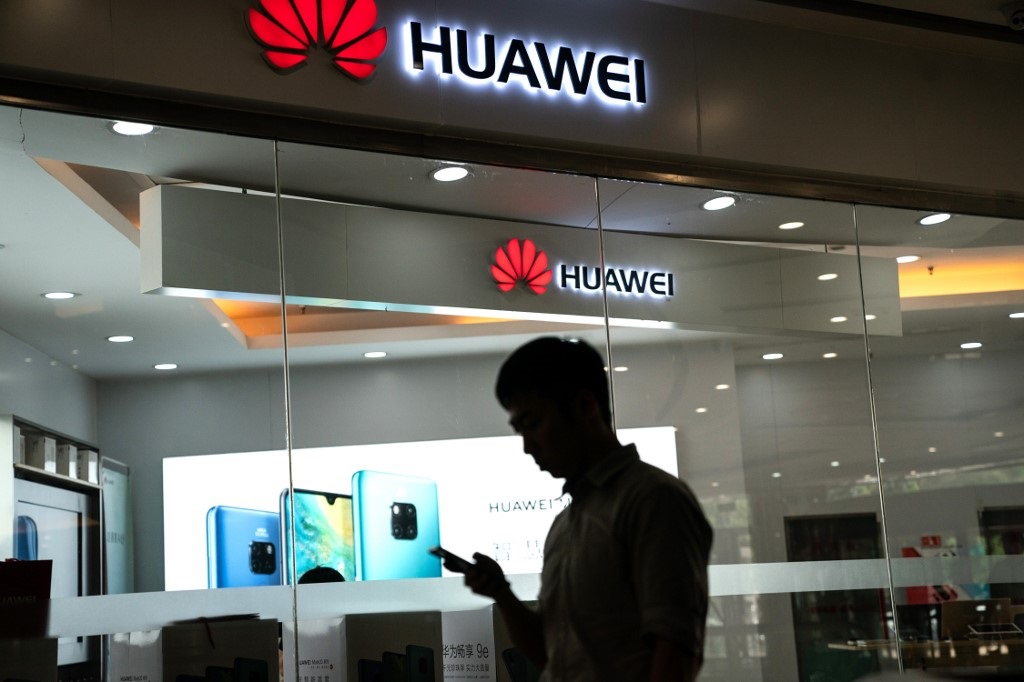
A man walks past a Huawei logo displayed at a retail store in Beijing on May 23, 2019.

BEIJING - Chinese telecom giant Huawei says it could roll out its own operating system for smartphones and laptops in China by the autumn after the United States blacklisted the company, a report said on Thursday.
The international version of the system could be ready in the first or second quarter of 2020, said Richard Yu, the head of Huawei's consumer business, told US channel CNBC.

The company was dealt a blow this week with Google's decision to partially cut off Huawei devices from its Android OS following a US order banning the sale or transfer of American technology to the firm.
"Today, Huawei, we are still committed to Microsoft Windows and Google Android," Richard Yu, head of Huawei's consumer business, told CNBC. "But if we cannot use that, Huawei will prepare the plan B to use our own OS."
The Global Times, a Chinese state-run daily, reported on Monday that the platform -- named "HongMeng" -- was undergoing trials and will gradually replace the Android system.
"We don't want to do this but we will be forced to do that because of the US government. I think the US, this kind of thing, will also not only be bad news for us, but also bad news for the US companies because we support" US businesses, Yu told CNBC.  "We don't want to do this but we have no other solution, no other choice."


The US Commerce Department, which added Huawei and 68 of its affiliates to an "entity list" last week, on Monday announced a 90-day reprieve, allowing some services to continue.
Source
AFP

Huawei soon losing access to Android updates, Google apps, after Trump trade ban [Updated]


Update 3: The U.S. Commerce Department has granted a temporary license for Huawei, restoring its ability to operate existing networks and provide software updates to devices.
The temporary general license is specifically aimed at letting Huawei support existing customers and devices, rather than continue development of future products using software, technology or components from U.S. companies. The license is set to run until August 19, 2019, buying Huawei time to operate somewhat normally and ease the burden on consumers and businesses that currently work with Huawei.
Details are not yet fully available, but the expectation is that this temporary license would not allow Huawei to, for example, work with companies like Google on future versions of Android or Qualcomm on future smartphones.

Update 2: Huawei has furnished an official response, stating that it will continue to roll out security updates and after-sales service to all Huawei and Honor devices. The Honor 20 global launch is also scheduled to go through unchanged on May 21:
Huawei has made substantial contributions to the development and growth of Android around the world. As one of Android's key global partners, we have worked closely with their open-source platform to develop an ecosystem that has benefitted both users and the industry.
Huawei will continue to provide security updates and after-sales services to all existing Huawei and Honor smartphone and tablet products, covering those that have been sold and that are still in stock globally.
We will continue to build a safe and sustainable software ecosystem, in order to provide the best experience for all users globally.
Plus, nothing has changed for HONOR. We will be having our exciting launch event tomorrow in London for HONOR 20 Series.

Update 1: Google has clarified that Google Play services and Play Protect will continue to work on Huawei devices:

For Huawei users' questions regarding our steps to comply w/ the recent US government actions: We assure you while we are complying with all US gov't requirements, services like Google Play & security from Google Play Protect will keep functioning on your existing Huawei device.


Original story follows:

Reuters reports that Google has put gears in motion to stop working with Huawei on future Android updates and device certifications after an executive order and subsequent U.S. Commerce Department blacklist made it difficult for certain companies to pursue business with U.S. entities.
Google is merely complying with the trade blacklist, on which Huawei and 68 of its subsidiaries were placed last week. The ban was enacted when Huawei was placed on a so-called Entity List, which bars the company from purchasing equipment from U.S. companies without prior government approval, something the Commerce Department is unlikely to give in the near future. The Trump administration has accused Huawei of working with the Communist Party of China to undermine international networks by potentially installing backdoors in network equipment. No proof of such vulnerabilities has been made public.

Because of the trade ban, companies like Google, Qualcomm, Intel, and NVIDIA are not allowed to sell or make deals with companies on the Entity List; Huawei relies on Google for access to the closed portions of Android, as well as its Play Services suite, which must be approved for every phone a manufacturer releases. According to Reuters, Google won't retroactively remove Play Services support for existing phones, but it will no longer provide software updates for them, and it won't certify new phones. Huawei already released a list of phones to be updated to Android Q, but it's unclear whether those devices will receive it once it's released to the public later this summer
Huawei isn't barred from using Android's open-source components, which are freely available to any organization so long as they abide by the licensing terms. Huawei uses Android's open source libraries, also known as AOSP, to build EMUI's core codebase as well as release updates to its phones in China, where Google services are not available.


That said, if US wants to kill Huawei's phone biz outside China, and it's PC business worldwide this is how it does it. And if no permission is forthcoming that's exactly what will happen.
More likely: This is just leverage and eventually Huawei will get permission to do business with Google, Intel, MS, etc. After all, US worked things out with ZTE last year, and the real concern w.r.t. Huawei is about infrastructure, not phones.


It's not clear whether the U.S. government intends for this to be a death blow of sorts to Huawei's western prospects — it also has a thriving PC business where it purchases components from Intel and NVIDIA — or if the trade ban is to be used as leverage with China in trying to reach better terms on an overall trade deal with the country.
Millions of Instagram influencers had their private contact data scraped and exposed

Millions of Instagram influencers had their private contact data scraped and exposed


Instagram app on an iPhone.


Amassive database containing contact information of millions of Instagram influencers, celebrities and brand accounts has been found online.
The database, hosted by Amazon Web Services, was left exposed and without a password allowing anyone to look inside. At the time of writing, the database had over 49 million records — but was growing by the hour.
From a brief review of the data, each record contained public data scraped from influencer Instagram accounts, including their bio, profile picture, the number of followers they have, if they’re verified and their location by city and country, but also contained their private contact information, such as the Instagram account owner’s email address and phone number.


Security researcher Anurag Sen discovered the database and alerted TechCrunch in an effort to find the owner and get the database secured. We traced the database back to Mumbai-based social media marketing firm Chtrbox, which pays influencers to post sponsored content on their accounts. Each record in the database contained a record that calculated the worth of each account, based off the number of followers, engagement, reach, likes and shares they had. This was used as a metric to determine how much the company could pay an Instagram celebrity or influencer to post an ad.


TechCrunch found several high-profile influencers in the exposed database, including prominent food bloggers, celebrities and other social media influencers.
We contacted several people at random whose information was found in the database and provided them their phone numbers. Two of the people responded and confirmed their email address and phone number found in the database was used to set up their Instagram accounts. Neither had any involvement with Chtrbox, they said.


Shortly after we reached out, Chtrbox pulled the database offline. Pranay Swarup, the company’s founder and chief executive, did not respond to a request for comment and several questions, including how the company obtained private Instagram account email addresses and phone numbers.
The scraping effort comes two years after Instagram admitted a security bug in its developer API allowed hackers to obtain the email addresses and phone numbers of six million Instagram accounts. The hackers later sold the data for bitcoin.
Months later, Instagram — now with more than a billion users — choked its APIto limit the number of requests apps and developers can make on the platform.
Facebook, which owns Instagram, said it was looking into the matter.


“We’re looking into the issue to understand if the data described – including email and phone numbers – was from Instagram or from other sources,” said an updated statement. “We’re also inquiring with Chtrbox to understand where this data came from and how it became publicly available,” it added.
US ban on Huawei a ‘cynically timed’ blow in escalating trade war, says firm

US ban on Huawei a ‘cynically timed’ blow in escalating trade war, says firm

Huawei denounced Donald Trump’s ban on the sharing of US tech with ‘foreign adversaries’.

The US ban on sharing technology with Huawei was a “cynically timed” blow in the escalating trade war between the US and China, the Chinese firm’s top executive in the UK has said.
Huawei denounced Donald Trump’s ban on the sharing of US tech with “foreign adversaries”, after a string of US tech companies followed Google in restricting the company’s access to their products on Monday.
Speaking to BBC Radio 4’s World At One, Huawei’s executive vice-president in the UK, Jeremy Thompson, said the dispute was about trade, not security.
“We’re in the middle of a trade war between two big countries so the timing of this is to inflict maximum hurt on our organisation. We’re a football in between this trade war,” he said.
After failing to convince European allies to block the use of Huawei technology, the Trump administration issued an executive order last week aimed at cutting off the Chinese firm from US suppliers.
Google confirmed on Monday that it was restricting Huawei’s access to the Android operating system on which the Chinese firm’s mobile devices depend. Reuters reported on Sunday that Google had suspended all business with Huawei that required the transfer of hardware, software and technical services, except those publicly available.
Reuters reported on Monday that Lumentum Holdings, which supplies parts to Apple’s Face ID feature, is also restricting business with Huawei. Bloomberg reported that other industry giants, including Intel Corp and Qualcomm Inc, have told their employees that they will not supply Huawei until further notice.
The latest restrictions are likely to hit Huawei’s European business, its second-biggest market, because it licenses many of its mobile phone services from Google in Europe.
Thompson told the BBC that Huawei had developed its own operating system it could use instead of Android; that was its “plan B” only if it was impossible to work with Google.
“This is 100% about trade and we did expect something along these lines – not perhaps as cynically timed as it is right now, but we are developing parallel operating systems – that’s why we invest $14bn a year in R&D, and we have used some of that investment to find alternatives,” Thompson said.
Huawei has promised to continue providing security updates and after-sale services for its smartphones and tablets. The firm did not clarify what the ban will mean for new Huawei phones but instead underscored its previous cooperation with Android.
“Huawei has made substantial contributions to the development and growth of Android around the world,” it said. “As one of Android’s key global partners, we have worked closely with their open-source platform to develop an ecosystem that has benefited both users and the industry.”
A spokesman for China’s ministry of foreign affairs, Lu Kang, said Beijing would “support Chinese enterprises in defending their legitimate rights through legal methods”.
Observers say Chinese countermeasures could include encouraging a consumer boycott of US goods, such as Apple products. China is Apple’s third largest market by sales volume. Increased inspections or added regulatory hurdles are other options. In 2014, amid US accusations of Chinese cyber-theft, Microsoft offices in China were subjected to raids by inspectors.
In an interview in March with the German publication Die Welt, Richard Yu, the head of the company’s consumer division, said the company had a “plan B”. He said: “We have prepared our own operating system. Should it ever happen that we can no longer use these systems, we would be prepared.”
Chipmakers such as Intel, Qualcomm, Xilinx and Broadcom have told employees they will not supply chips to Huawei until further notice, Bloomberg reported on Monday, citing people familiar with the matter.
Other US companies that could be implicated in the Huawei ban are Intel and Microsoft, which provide chips and software for Huawei’s computers. Intel declined to comment “at the moment”, but Bloomberg reported that the chipmaker had told employees that it will cease supplying Huawei “until further notice”. Microsoft did not immediately respond to queries.
Huawei, which relies on chips from the US, has reportedly been stockpiling the chips and other components in anticipation of the ban. In an interview on Saturday, the Huawei chief executive, Ren Zhengfei, said the company would be “fine” without US chips.
YOU MIGHT BREAK UP WITH YOUR IPHONE WHEN YOU SEE THE NEW SAMSUNG GALAXY S10


From the all-new Samsung Galaxy S10 family packed with cutting-edge tech, to the budget-friendly Galaxy A6, we rounded up our top Samsung smartphones. The 10th installment of the iconic Samsung Galaxy S product line includes three members: the big-screen Galaxy S10+, the Galaxy S10, and the impressively compact Galaxy S10e.
The hot new smartphones were introduced alongside a groundbreaking new device — the Samsung Galaxy Fold. As its name suggests, it can easily transform from a smartphone to a tablet. Because early Galaxy Fold units had display issues, Samsung decided to postpone the launch of the futuristic smartphone. The Fold will arrive in the months ahead with a considerable price tag.


The trio of Galaxy S10 smartphones feature bold new design language and class-leading hardware specs. They are available in a multitude of color options, including black, white, blue, and pink. The range-topping Samsung Galaxy S10+ with 1 TB of storage is also available in black or white, with a decidedly premium ceramic finish.
All high-end smartphones from Samsung have a waterproof design on top of other essential features — such as wireless charging, built-in stereo speakers, and expandable storage, among many others. Every Galaxy S and Galaxy Note device comes bundled with an excellent pair of wired earbuds, tuned by AKG.


Note: Before purchasing an unlocked smartphone, check carefully if it's fully compatible with your preferred carrier. Samsung's unlocked Galaxy S and Galaxy Note offerings are compatible with all major carriers in the United States.
The prices of most smartphones on this list are for unlocked, contract-free devices. You can opt to purchase any phone on small monthly installments either from Samsung or through the wireless carrier of your choice.

أوبو تسيطر على سوق الهواتف الذكية في الصين


لقد سيطرت شركة أوبو " OPPO " الصينية على سوق الهواتف الذكية في الصين خلال عام 2016 الماضي حسب آخر الإحصائيات من شركة الأبحاث IDC.
حيث نجحت الشركة في بيع ما يقارب 78.4 مليون هاتف ذكي خلال العام المنصرم بنسبة سوقية تبلغ 16.8 بالمئة مقارنةً بحوالي 35.3 مليون هاتف في 2015، وبلغت نسبة النمو في المبيعات حوالي 122.2 بالمئة ما بين العامين المذكورين.
في حين حلّت شركة هواوي " HUAWEI " الشهيرة في المركز الثاني بعد بيع حوالي 76.6 مليون هاتف تقريبًا خلال العام الماضي، وبلغت نسبتها في السوق حوالي 16.4 بالمئة، في حين بلغت نسبة النمو في المبيعات 21.8 بالمئة تقريبًا خلال الفترة من 2015 وحتى 2016.

المفاجأة في هذا التقرير هو خروج آبل " APPLE "  من المراكز الثلاث الأولى، حيث جائت في المركز الرابع بنسبة 9.6 بالمئة من السوق في الصين، ونجحت في بيع 44.9 مليون هاتف في 2016، بالمقارنة مع 58.4 مليون هاتف في 2015، ما أدى إلى انخفاض نسبته حوالي 23.2 بالمئة ما بين العامين.
والمفاجأة الثانية في هذا التقرير كانت شركة شاومي " XIAOMI " الصينية التي تأتي في المركز الخامس وباعت هواتف ذكية تبلغ 41.5 مليون خلال 2016 في انخفاض بلغ 36 بالمئة مقارنةً بعام 2015 الذي بلغت المبيعات فيه 64.9 مليون هاتف.

TOP BEST SMARTPHONES LESS THAN 300 EUROS (Part 2)

NEXUS 5X, ANDROID EN VERSION STOCK


Third collaboration between Google and LG, Nexus 5 X just bring happiness to the users of the Nexus 5 (2013) offering them a true successor to the content format of 5.2 inches. A version provided to the taste of the day which opens the latest version of the Google OS, Android 6.0 Marshmallow.

Program this Nexus 5X, many improvements as a port USB Type C reversible and a reader of fingerprints on the back. Performance are provided by a processor Snapdragon 808 with 2 GB of RAM and the photo part is quite ambitious since the phone team to a Sony IMX377 with 12.3 megapixel photo sensor (the same as the Nexus 6P). The big advantage of this Nexus range is, obviously, very fast Android updates since they are the first to receive as well as the inventory interface and without overlay of the OS.

  • Écran : LCD 5,2 pouces avec définition Full HD (1920 x 1080), résolution de 423 ppi, verre de protection Gorilla Glass 3
  • Processeur : hexa core 64 Bit Snapdragon 808 cadencé à 1,8 Ghz
  • Partie graphique (GPU) : Adreno 418
  • Mémoire : 2 Go LPDDR3
  • Appareil photo : 12,3 mégapixels d’ouverture f/2.0 avec double flash LED et autofocus laser. Vidéo slow motion à 120 fps.
  • Caméra frontale : 5 Mégapixels ouverture f/2.0
  • Batterie : 2700 mAh (Recharge rapide : presque 4h d’autonomie en 10 minutes)
  • Stockage interne : 16/32 Go
  • Support microSD : Non
  • Réseau : 4G LTE Catégorie 6
  • Connectivité : Wi-Fi 802.11 a/b/g/n/ac 2×2 MIMO, double bande (2,4 et 5 GHz), Bluetooth 4.2, NFC, GPS/GLONASS, Boussole numérique
  • Connectique : USB Type C et jack 3,5 mm
  • Dimensions : 147 x 72,6 x 7,9 mm
  • Poids : 136 grammes
  • Couleurs : Carbone, Quartz, Givre
  • OS : Android 6.0 Marshmallow
  • Autre : Lecteur d’empreintes digitales

ONEPLUS X, THE SMARTPHONE DESIGN


Real good surprise, OnePlus X we had tested early January is a mid range a little better supplied than other smartphone. Why? Simply because it takes the excellent processor Snapdragon 801 of the high end of 2014 and associate it with 3 GB of RAM. A very interesting model that team has an AMOLED screen 5-inch and a 13 megapixel camera sensor based on the ISOCELL technology developed by Samsung.

We also appreciate the OnePlus X whose price has recently fallen for its premium design combining glass (or ceramic) and metal and it allows to differentiate itself from its competitors positioned on the same niche. Of course, as usual with OnePlus, value for money is the part.

  • Écran : OLED 5 pouces 2,5D, Full HD 1920 x 1080 pixels (441 ppp), Protection Gorilla Glass 3
  • Processeur : 4 cœurs Qualcomm Snapdragon 801 cadencé à 2,3 Ghz
  • GPU : Adreno 330
  • RAM : 3 Go LPDDR3
  • Stockage : 16 Go
  • Slot SD : jusqu’à 128 Go
  • Appareil photo : 13 Mégapixels Isocell, Ouverture f /2.2 Vidéo HD 1080p (60 fps), 720p (120 FPS)
  • Caméra frontale : 8 MP, Ouverture f/2.4
  • Batterie : 2525 mAh (non amovible)
  • Connectivité : Wi-Fi 802.11 a/g/b/n 2,4, GPS, Bluetooth 4.0 LE, GLONASS
  • Réseau : 4G LTE Cat. 4 (jusqu’à 150 / 50 Mbits/s), compatible avec les bandes de fréquences 4G françaises
  • Connectique : Double nano SIM SIM ou Nano SIM + microSD , prise casque 3,5 mm, micro USB 2.0, bouton physique pour les notifications
  • Dimensions : 140 x 69 x 6,9 mm
  • Poids : 138 grammes (160 grammes pour la version Ceramic)
  • Coloris : Onyx, Champagne, Ceramic
  • OS : Android 5.1.1 Lollipop + Oxygen OS 2.1.2

LENOVO MOTO G4 PLUS


Moto G4 as we recently tested is the first smartphone of the range marked by the takeover of Motorola by Lenovo who made his paw in modernizing and improving the concept developed in 2013 by the American manufacturer. The improvements aremany including the side photo. The phone team is a sensor of 16 Megapixel with dual LED, autofocus laser flash and autofocus to detection of phase the DxOMArk testtool place at the same level as that of the 6s iPhone or the Nexus 6 p.

While the screen is gaining in pixels to achieve a Full HD 1080 p definition, a fingerprint reader adds faade. On their side, the performance take a true kick thanks to the Snapdragon 617 of Qualcomm processor.

  • Écran : IPS LCD 5,5 pouces 1920 x 1080 pixels (401 ppp), Gorilla Glass 3, ratio 71,2%
  • Processeur : Octa-core Qualcomm MSM8952 Snapdragon 617 à 1,5 Ghz
  • GPU : Adreno 405 @550 Mhz
  • RAM : 2, 3 ou 4 Go selon les régions (nous avons testé la version 2 Go)
  • Stockage : 16 / 32 ou 64 GB selon les régions (nous avons testé la version 16 GB)
  • Slot SD : oui
  • Appareil photo : 16 MP, Ouverture f /2.0, double flash LED, autofocus laser et à détection de phase (PDAF).
  • Caméra frontale : 5 MP, Ouverture f/2.2
  • Batterie : 3000 mAh, non amovible avec recharge rapide TurboPower
  • Connectivité : Wi-Fi 802.11 a/g/b/n, Bluetooth 4.1 LE, A-GPS, GLONASS, NFC, Wi-Fi Direct, FM Radio
  • Réseau : 4G LTE Cat. 4 (150 / 50 Mbits/s)
  • Connectique : microSIM ou nanoSIM, prise casque 3,5 mm, micro USB 2.0, lecteur d’empreinte
  • Dimensions : 153 x 76.6 x 7.9 – 9.8 mm
  • Poids : 155 grammes
  • Coloris : noir, blanc
  • OS : Android 6.0.1 Marshmallow

SAMSUNG GALAXY A3 (2016), MID-RANGE SAMSUNG VERSION


The Samsung Galaxy A3 (2016) is intended primarily for users looking for a smartphone premium design and at this level here, we can say that the bet is successful. Like the Galaxy S7 and other top models in range of Samsung it associated with nice slices metal a glass 2,5D as well at the front from the back. Technically speaking, it is not better provided three models of this new range but at least has the merit of offering a compact size of 4.7 inches.

Galaxy A3 which has a beautiful AMOLED screen definition HD 720 p and a 13 megapixel camera which is doing pretty well. Note that this model offers nor reader of fingerprints or OIS optical stabilization, unlike its big brother, the Galaxy A5 2016 we had tested it some time ago.

  • Ecran : Super AMOLED de 4,7 pouces avec définition HD 720p
  • Processeur : quad core cadencé à 1,5 Ghz
  • RAM : 1,5 Go
  • Stockage : 16 Go
  • Micro SD : jusqu’à 128 Go
  • Appareil photo : 13 Mégapixels d’ouverture f/1.9
  • Camera frontale : 5 Mégapixels d’ouverture f/1.9
  • Batterie : 2300 mAh
  • Connectivité : Wi-Fi 802.11 b/g/n, Bluetooth® v 4.1, ANT+, USB 2.0, NFC (UICC)
  • Réseau : 4G catégorie 4
  • Dimensions : 134.5 x 65.2 x 7.3 mm
  • Poids : 132 grammes
  • OS : Android 5.1 Lollipop

XIAOMI MI4S, PREMIUM AND ELEGANT


Xiaomi Mi4S stands as a pretty good surprise. Cheaper than the top model range which was already very affordable, it offers the features of a high end of last year which in addition to a reader of fingerprints, USB Type C and a storage capacity of 64 GB, in a premium design and very elegant linking back plastic and metal slices.

A smartphone that will delight all those who do not seek a beast race at all costs but simply a powerful smartphone to the sleek design and whose technical characteristics remain ambitious. Beware, one shop to another, its price is variable but it is very easy to find less than €300. A Xiaomi Mi4S which recorded 200 000 sales in one day.

  • Écran : LCD IPS de 5 pouces avec définition Full HD 1080p
  • Processeur : hexa core Qualcomm MSM8992 Snapdragon 808
  • GPU : Adreno 418
  • RAM : 3 Go
  • Stockage : 64 Go
  • Slot SD : jusqu’à 128 Go
  • Appareil photo : 13 mégapixels, ouverture f/2.0 avec flash dual tone et autofocus à détection de phase
  • Caméra frontale : 5 mégapixels ouverture f/2.0
  • Batterie : 3260 mAh
  • Connectivité : Wi-Fi 802.11 a/b/g/n/ac, dual-band, WiFi Direct, hotspot, Bluetooth 4.1, GPS
  • Réseau : 4G
  • Connectique : USB Type C
  • Dimensions : 139.3 x 70.8 x 7.8 mm
  • Poids : 133 grammes
  • Coloris : noir, blanc, or, rose
  • OS : Android 5.1 Lollipop via MIUI 7.0

HUAWEI P8, QUIET STRENGTH


For its P8, Huawei has revised its design gladly premium with its unibody metal hull and its ultra-slim dimensions. We thus speak of 6.4 mm thick only. Also the occupation of the screen has a screen size ratio particularly optimized with 78.3% of the covered surface. A great performance that can be enjoyed on a daily basis.

The same with a screen of 5.2 inches, Huawei P8 we tested last year will thrill those who dislike too large diagonals, while its octo-core Kirin 930 processor will satisfy all lovers of power and freedom, thanks to a very good autonomy. A top of 2015 that we finally find less than 300, a year after its release.

  • Ecran : IPS NEO de 5,2 pouces avec définition Full HD 1080p, résolution de 424 ppp
  • Processeur : octo core 64 Bit Hisilicon Kirin 930 avec quatre cœurs A53 cadencés à 1,5 Ghz et quatre cœurs A53 cadencés à 2 Ghz
  • RAM : 3 Go
  • Appareil photo : 13 mégapixels, ouverture f/2.0 avec double flash LED et stabilisation
  • Caméra frontale : 8 Mégapixels d’ouverture f/2.4
  • Batterie : 2680 mAh
  • Stockage interne : 16 Go / 64 Go, mémoire extensible via MicroSD jusqu’à 128 Go
  • Connectivité : WiFi, Bluetooth 4.1, NFC, GPS, 3G, 4G
  • Connectique : microUSB, prise casque 3,5 mm
  • Dimensions : 144.9 x 71,8 x 6,4 mm
  • Poids : 144 grammes
  • OS : Android Lollipop avec Emotion UI 3.1